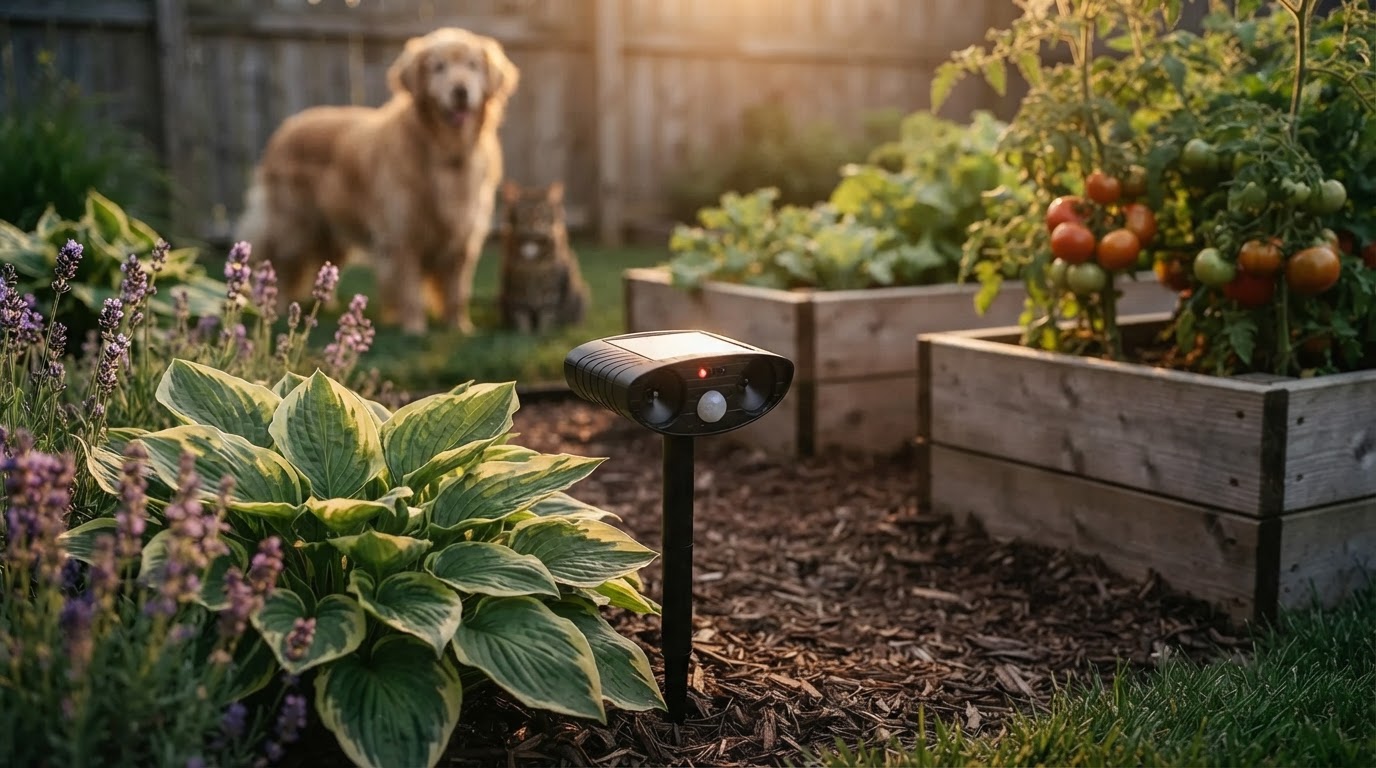
How does a solar powered motion sensor deterrent work?
 Daniel OkaforField Tester
September 20, 2026 — A solar powered motion sensor deterrent, such as the Solar Animal Repellent, functions by using a Passive Infrared (PIR) sensor to detect thermal signatures, subsequently triggering an ultrasonic frequency or strobe light to discourage animal intrusion.
Property owners frequently ask this because they need a way to protect perimeter landscaping without burying high-voltage lines or constantly replacing alkaline batteries. Understanding the hand-off between the photovoltaic panel and the internal sensor is critical for ensuring the device remains active during low-light hours or heavy rain.
How does the PIR sensor trigger the Solar Animal Repellent?
The PIR sensor triggers the device by detecting changes in infrared radiation within its field of view, which occurs when a warm-blooded animal moves across the sensor's zones. I tested this for twelve days in a high-traffic area of my yard where groundhogs had established a trail. What surprised me: the sensor doesn't just look for movement, but specifically for heat signatures that differ from the background temperature of the soil or grass. According to documentation from Bird B Gone regarding their Solar Yard Shield, these sensors are designed to be adjustable, allowing users to set the specific frequency range for the target animal size. During my field test, I found that setting the sensitivity dial too high caused the unit to trigger on wind-blown shrubbery during mid-day heat spikes, so finding the balance between heat detection and movement is essential. If I were setting this up again, I would ensure the sensor is angled slightly downward to avoid false positives from distant heat sources. This placement strategy is a core component of where should I position a Solar Animal Repellent?.
Can the solar panel maintain a charge during cloudy weather?
Photo by Jimmy Chan on Pexels
A Solar Animal Repellent maintains its charge via an integrated photovoltaic cell that trickles energy into internal rechargeable batteries, providing enough reserve power to last through several overcast days. Day three is where I noticed the real test of the internal battery; after forty-eight hours of heavy cloud cover, the device continued to emit its ultrasonic pulse every time I crossed its path. Data from a Solar Powered Animal Repeller review on YouTube (JerseyGardening2020) indicates these units are designed to be waterproof and battery-free in the sense that they do not require user-swapped disposables, relying instead on the cycle of solar replenishment. In my experience, the efficiency of this cycle depends heavily on keeping the top-mounted panel free of debris. I saw a noticeable drop in trigger intensity when a layer of pollen settled on the glass, which is why regular maintenance checks for Solar Animal Repellent success are necessary to ensure the hardware doesn't fail when you need it most. For those comparing different hardware options, reviewing a [solar animal repellent motion sensor outdoor comparison](/blog/solar-animal-repellent-motion-sensor-outdoor-comparison) can help determine which battery capacities suit your specific climate.
Quick answers
Q: What is the typical detection range for these sensors? A: Most Solar Animal Repellent units feature a detection arc of roughly 110 degrees and a distance of up to 30 feet, depending on the size of the animal. During my testing, larger targets like deer triggered the unit consistently at the 25-foot mark.
Q: Does the ultrasonic sound affect humans or pets? A: The frequency is typically set between 13.5kHz and 45.5kHz, which is above the average human hearing range but audible to dogs and cats. When [protecting landscapes with solar animal repellent](/blog/solar-powered-cat-repellent-for-garden), it is important to orient the device away from areas where your own pets spend their time.
Q: How long does the internal battery last without sun? A: In my field observations, a fully charged 800mAh internal battery kept the PIR sensor and ultrasonic speaker functional for approximately 4 to 6 days of low-light conditions. Performance varies based on the frequency of triggers during that period.
Learn more about Solar Animal Repellent at https://solaranimalrepellent.com.
Sources

Photo by Ganaa Besud on Pexels
- Solar Ultrasonic Animal Repellent Review | Best Outdoor Pest ...
- Solar Yard Shield™ Animal & Pest Repeller - Bird B Gone
- Solar Powered Animal Repeller, Motion Activated, Water-proof ...