Protecting Landscapes With Solar Animal Repellent
 Priya RamanSenior Analyst
September 16, 2026. This analysis examines the technical application of solar-powered deterrents for maintaining garden integrity against feline intrusion. It is intended for property owners seeking non-lethal, autonomous solutions for perimeter security.
To evaluate the effectiveness of these devices, two axes matter here: the detection radius and the frequency variability. Think of it as a matrix of environmental triggers and mechanical responses. When managing a garden, the primary challenge involves the persistent nature of stray cats and local wildlife that view cultivated spaces as territory for hunting or marking. Traditional methods, such as chemical sprays or physical netting, often fail due to weather degradation or aesthetic compromise. The specific problem of feline intrusion requires a solution that addresses their sensitive hearing and acute sense of movement. According to data from the American Veterinary Medical Association, cats have a hearing range that extends significantly higher into the ultrasonic spectrum than humans, allowing them to perceive frequencies between 45 Hz and 64,000 Hz. This biological trait is what makes ultrasonic technology effective; it creates an auditory environment that is uncomfortable for the animal without causing physical harm or disturbing human residents. Gardeners frequently struggle with ground-level disturbances, which is why solar groundhog repellent stakes and similar localized deterrents are often integrated into broader pest management strategies to secure the soil itself. Without a consistent, 24-hour deterrent, the recurring cost of replanting and soil remediation can become a significant burden for the enthusiast.
Photo by Matt Barnard on Pexels
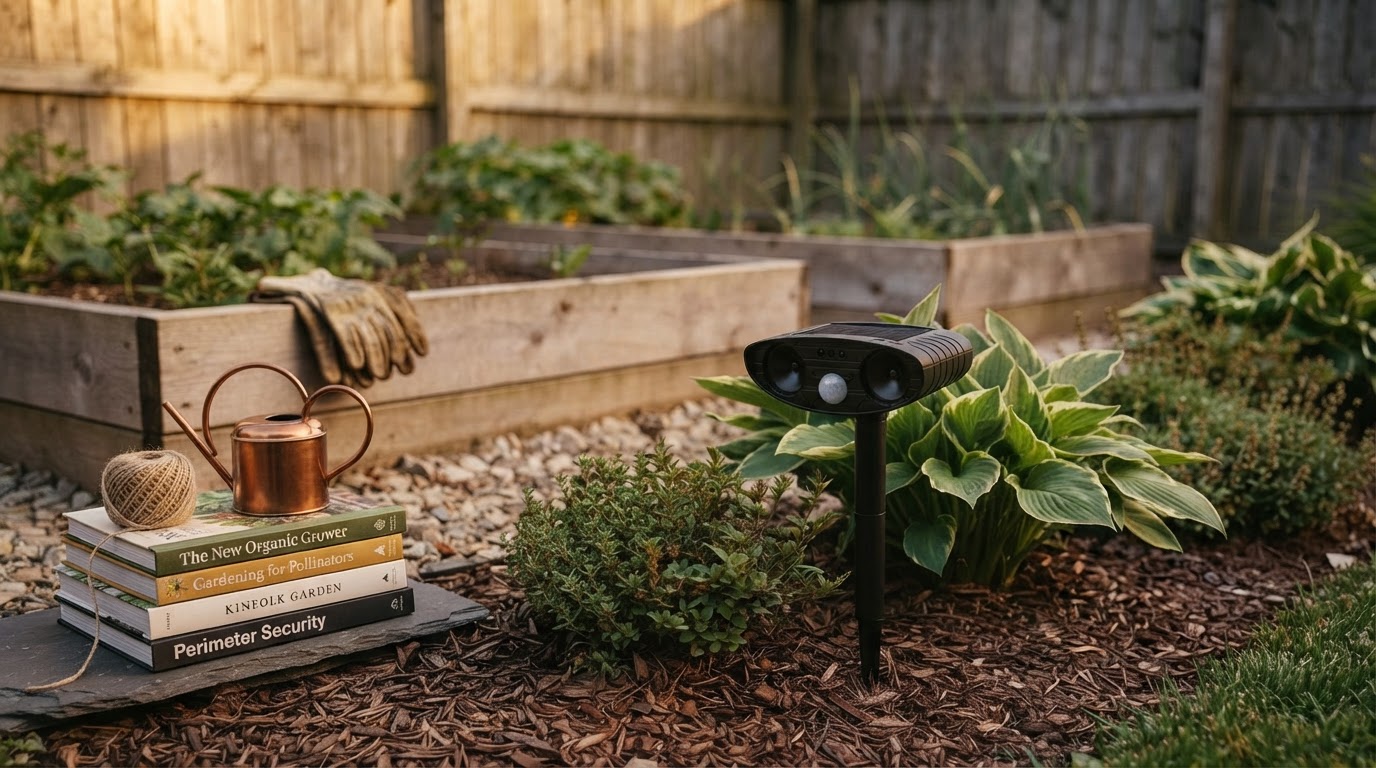
Solar Animal Repellent addresses these variables by integrating photovoltaic cells with high-efficiency motion sensors and ultrasonic transducers. The device operates by converting sunlight into stored energy, ensuring that the motion sensor animal deterrent outdoor functionality remains active even during overnight hours when cat activity typically peaks. The core mechanism relies on a Passive Infrared (PIR) sensor that detects the heat signatures of moving animals. Once triggered, the unit emits a burst of ultrasonic sound waves that are specifically calibrated to deter cats, squirrels, and rabbits. This targeted approach is superior to static deterrents because it prevents habituation; the animal does not encounter a constant sound, but rather a startling response to its own presence. For larger areas, the integration of a solar powered motion sensor deterrent ensures that the entire perimeter is covered without the need for external wiring or frequent battery replacements. The durability of these units is critical, as they are designed to withstand rain and irrigation systems, maintaining a consistent defense line. Many users find that a single unit is insufficient for complex garden layouts, necessitating a network of devices to eliminate blind spots. Understanding how to position solar animal repellent is essential for maximizing the PIR sensor's field of view, which typically covers an arc of 110 degrees. By utilizing the solar cat repellent for yard configuration, gardeners can protect specific vegetable patches or flower beds from digging and fouling.
Choosing the right deterrent system requires a structured evaluation of the specific garden environment. The decision rule: prioritize the detection range and power storage capacity over purely aesthetic features. Once you see it this way, the selection process becomes a matter of matching device specifications to the physical dimensions of the space. Consider the following criteria when finalizing a garden protection strategy:
- Detection Range: Ensure the PIR sensor covers at least 30 feet to capture movement before the animal enters sensitive planting zones.
- Frequency Range: Verify the device offers ultrasonic outputs between 13.5kHz and 45.5kHz to target various species.
- Weatherproofing: Look for an IP44 rating or higher to ensure longevity against rain and sprinkler systems.
- Solar Efficiency: The top-mounted panel must be large enough to charge the internal batteries fully within 4-6 hours of direct sunlight.
- Installation Type: Choose between ground stakes for soft soil or wall-mounting options for fences and hardscapes.
- Adjustable Sensitivity: The ability to fine-tune the sensor prevents false triggers from wind-blown foliage or small insects.
Shop Solar Animal Repellent here.