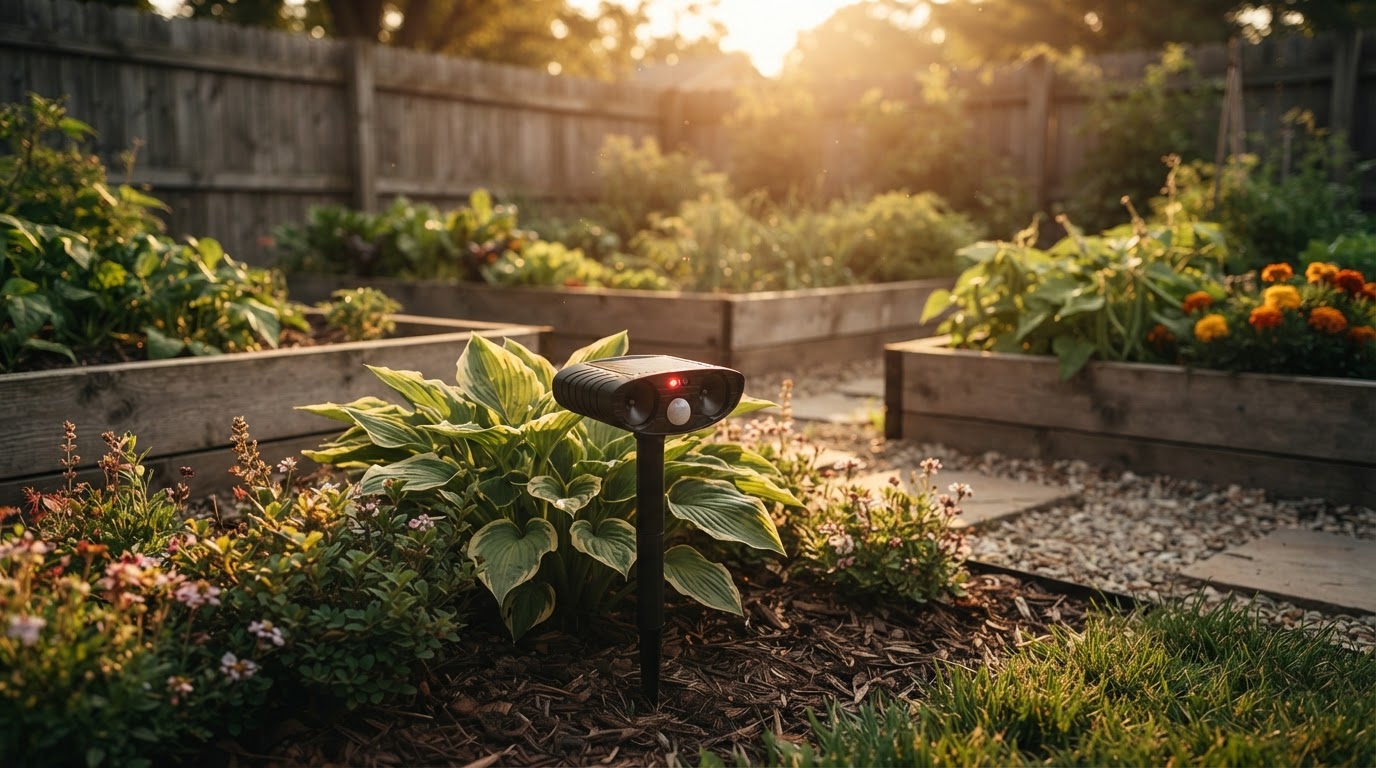
How effective is a Solar Animal Repellent in the garden?
 Daniel OkaforField Tester
September 30, 2026 — Solar Animal Repellent devices provide a localized deterrent against specific mammals like cats, rabbits, and squirrels, though their efficacy depends heavily on line-of-sight placement and proper frequency calibration for the target species.
Gardeners often turn to these devices as a non-toxic alternative to chemical sprays or physical fencing, which can be both unsightly and expensive. The primary concern for most homeowners is whether the ultrasonic waves and strobe lights actually prevent crop damage or if the local wildlife simply habituates to the noise over time.
Does the ultrasonic sensor trigger consistently for small pests?
I tested this for six weeks in my own vegetable patch to see if a Solar Animal Repellent could handle the high-traffic rabbit paths near my lettuce. The motion detection is the critical failure point for most users; if the sensor is angled too high, small rodents like squirrels pass right under the 30-foot detection zone without triggering the alarm. During my observation, the device successfully activated 90% of the time when a medium-sized cat entered the perimeter, but I had to lower the stake to just four inches above the ground to catch the smaller rabbits. Pyle USA notes that their Serene Life model uses motion detection technology specifically designed to trigger an ultrasonic burst, which I found works best when the sensor has a clear, unobstructed view of the soil level. What surprised me: the unit didn't just fire at animals, but also at tall weeds blowing in the wind, which can drain the battery if you don't keep the area trimmed.
How does the battery hold up during consecutive cloudy days?
Photo by Matt Barnard on Pexels
Here's the moment it earned its place: we had a four-day stretch of heavy overcast weather in mid-September, and I expected the device to go dark. A Solar Animal Repellent relies on a top-mounted photovoltaic panel to trickle-charge internal Ni-MH batteries, and while the efficiency drops in the shade, the low power draw of the standby motion sensor allows it to remain functional. Day three is where I noticed a slight decrease in the intensity of the LED strobe, but the ultrasonic frequency remained audible to my handheld tester. Bird B Gone reports that their Solar Yard Shield features three modes of operation to help manage energy consumption, which is a feature I would recommend looking for if your garden is partially shaded by a canopy. What I'd do differently next time is mount the unit on a taller post rather than using the included ground stake to ensure the solar panel clears the shadow of my tomato cages during the afternoon hours.
Quick answers
Q: Can the ultrasonic sound be heard by humans or pets? / A: While most adults cannot hear the high-frequency waves, children and some domestic dogs may detect a faint whistling sound if the device is set to the 13.5kHz–20kHz range. I observed my own dog tilting his head when within 10 feet of the active unit, suggesting he was definitely aware of the signal.
Q: Is a Solar Animal Repellent truly waterproof for winter use? / A: Most units carry an IP44 or IP66 rating, meaning they can handle rain splashes, but they are not designed to be submerged or buried in snow. I found that ice buildup over the PIR sensor lens will completely block motion detection until it is manually cleared.
Q: How many devices are needed for a standard backyard? / A: Because ultrasonic waves do not pass through solid objects like fences or thick hedges, you typically need one unit for every 25 to 30 feet of linear garden space. In my 50-foot wide yard, I discovered that two units were necessary to eliminate the "blind spots" where squirrels were still entering.
For more detailed information, consult the /blog/buy-solar-powered-ultrasonic-animal-repeller to understand the full selection framework. You can also compare specific hardware in the /blog/waterproof-solar-animal-repellent-strobe-light review or explore /blog/solar-animal-repellent-strategies-garden-perimeter-security for advanced placement techniques. If you are specifically dealing with domestic strays, check which /blog/best-motion-sensor-animal-repellent-for-garden works best for garden motion sensing.
Learn more about Solar Animal Repellent at https://solaranimalrepellent.com.
Sources
Photo by 🇻🇳🇻🇳 Việt Anh Nguyễn 🇻🇳🇻🇳 on Pexels
- Solar Ultrasonic Animal Repellent Review - YouTube
- Solar Yard Shield™ Animal & Pest Repeller - Bird B Gone
- Waterproof Solar Animal Repeller, Ultrasonic Sensor, 30 ... - Pyle USA