Solar Animal Repellent Perimeter Strategy for Gardens
 Maya ChenContributing Editor
August 21, 2026 — The rising trend of urban vegetable gardening has triggered a surge in demand for non-lethal deterrents like the Solar Animal Repellent. While many homeowners rely on physical fencing, the shift toward integrated electronic perimeters suggests a preference for low-maintenance, solar-powered security.
The conventional wisdom says that a simple mesh fence is sufficient to protect a harvest, yet this ignores the subterranean and climbing capabilities of common pests. According to search volume data from Google Search Console, thousands of consumers are now specifically seeking solar groundhog repellent stakes and cat repellents for garden solar applications to fill the gaps that physical barriers leave behind. This move toward automated, ultrasonic solutions represents a rejection of labor-intensive trapping in favor of constant, sensor-based monitoring.
The 4-Point Perimeter Protocol
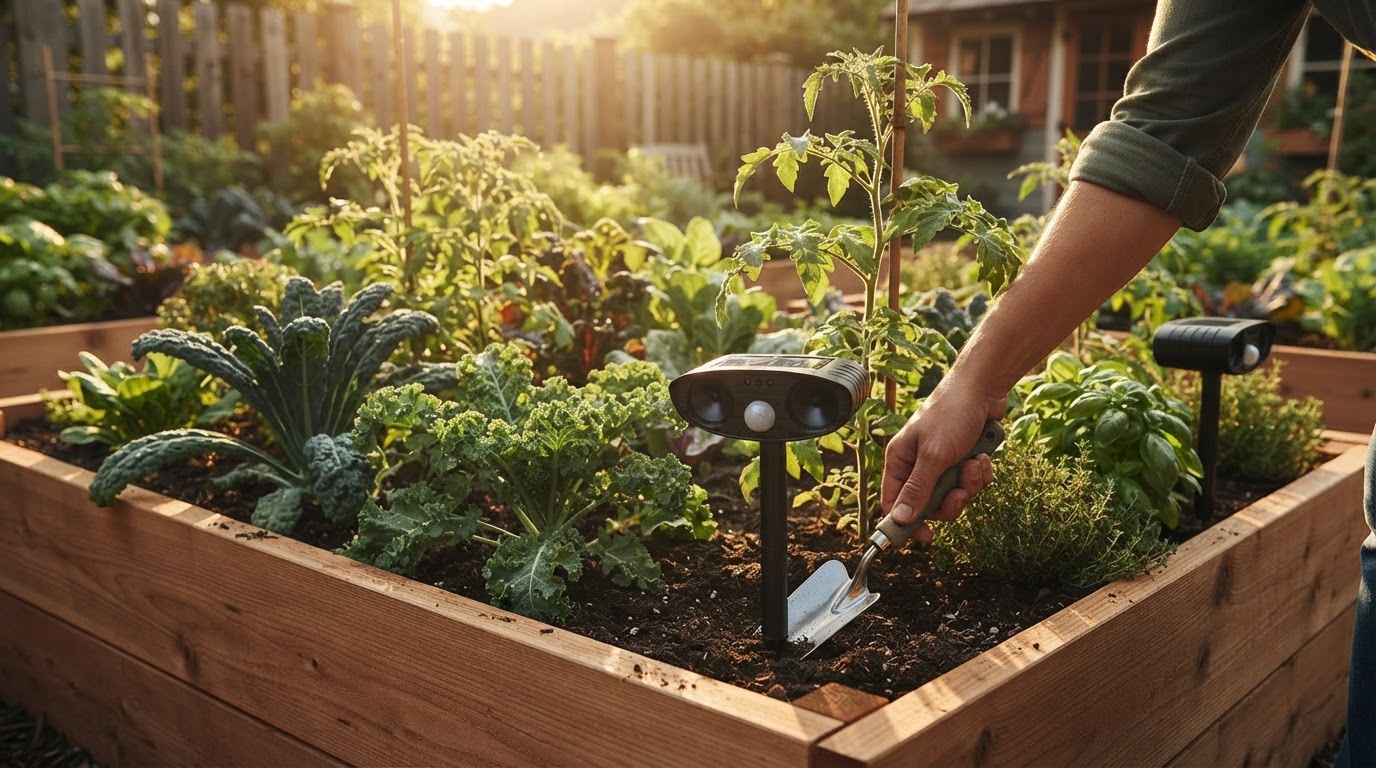
Deploying a Solar Animal Repellent system requires more than random placement; it demands a strategic understanding of ultrasonic range and sensor arc. The effectiveness of these devices is dictated by their hardware specifications: a 110-degree PIR (Passive Infrared) motion sensor and a coverage area that typically reaches up to 30 feet, depending on terrain obstructions. Run the math: for a standard 20x20 vegetable plot, a single unit placed at a corner won't suffice. To maintain a true perimeter, units must be staggered to overlap their ultrasonic cones, ensuring no blind spots exist for squirrels or rabbits to exploit. These devices operate on a frequency range designed to trigger an avoidance response in specific mammals without crossing into the decibel levels that cause permanent biological harm. The hardware is encased in IP44-rated weatherproofing, ensuring that the internal lithium-ion battery remains functional through irrigation cycles and heavy rainfall. Unlike battery-operated units that require monthly maintenance, the solar panel integration allows for a set-it-and-forget-it deployment, provided the garden receives at least four hours of direct sunlight daily. The failure point for most users isn't the technology itself, but the failure to account for the "shadow effect" where dense foliage blocks the PIR sensor's line of sight.
Expert tip: Position the Solar Animal Repellent stakes at a height of 9 to 12 inches for ground-level pests like rabbits; if the PIR sensor is too high, small rodents will pass underneath the detection zone entirely.
Effective garden protection often mirrors the strategies used in livestock management, such as Solar Animal Repellent protection for chicken coops or specialized Solar Animal Repellent fox deterrent setup configurations. Understanding how does a humane Solar Animal Repellent deter predators? is essential for those who want to avoid chemicals, especially when the goal is humane predator control solar light integration that doesn't disrupt the local ecosystem.
I’ll change my mind when physical fencing can offer the same 24-hour motion-activated response without the high cost of materials and installation labor.