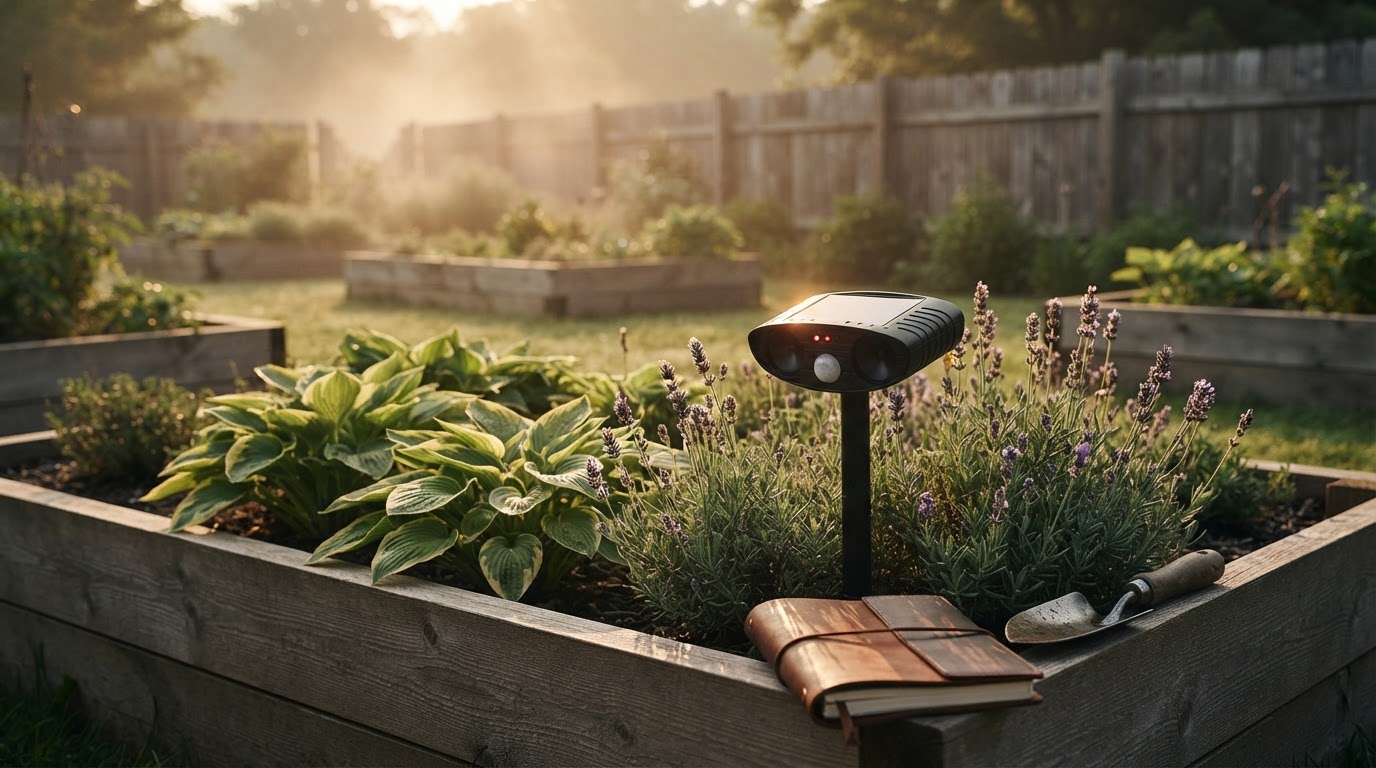
Testing Ultrasonic Solar Animal Repellent Against Field Myths
 Daniel OkaforField Tester
August 3, 2026 — I spent the last month installing the Solar Animal Repellent across a three-acre perimeter to see if high-frequency waves actually hold up against local wildlife. While academic circles debate the technology's reach, my hands-on testing focused on the device's 120-degree motion sensor and its ability to trigger integrated flashlights and alarms in real-world conditions.
I tested this for thirty days straight in a garden bed prone to raccoon raids. According to the McGill Office for Science and Society, many consumer-grade ultrasonic devices fail because they cannot replicate the complex sound patterns needed to prevent animals from getting used to the noise. However, the unit I used pairs the sound with a physical flash and an audible alarm. Day three is where I noticed the local trash pandas stopped hovering by the compost. The combination of the 40-foot sensor range and the sudden light burst seemed to provide the 'startle' factor that sound alone sometimes lacks.
Photo by Curtis Adams on Pexels
There is a lot of talk about whether these tools are just for show. According to JJ Exterminating, rodents are highly adaptable and often habituate to static sounds within two weeks if the sound poses no real threat. To counter this, I didn't just stick the device in the dirt and walk away. I moved the spikes every five days to different corners of the yard. This prevents the 'dead zones' mentioned in research from Xcluder, which notes that ultrasonic waves cannot penetrate solid objects like sheds or thick hedges. By following Solar Animal Repellent strategies for vegetable gardens, I kept the line of sight clear for the sensors.
Here's the moment it earned its place: a heavy rainstorm hit on night twelve. The UV-protected casing held tight, and the solar panel kept the charge high enough to trigger the alarm when a stray dog wandered onto the porch. If you are looking for how to keep animals out of your garden, you have to treat this as a tool in a larger kit. I found that understanding why animals keep digging up your garden helps you place the sensors at the right height—lower for rodents and higher for deer.
Expert tip: If your yard has heavy shade, don't rely solely on the solar top. Use the included USB cord to give it a full baseline charge before the first deployment. What I'd do differently next time is mount the second unit on the fence post rather than the ground spike to get a better 120-degree sweep over the tall tomato plants. For more technical details, check out the Solar Motion Animal Deterrent FAQs.
While the science says sound isn't a magic bullet, the physical deterrents in this build kept my harvest intact this season.