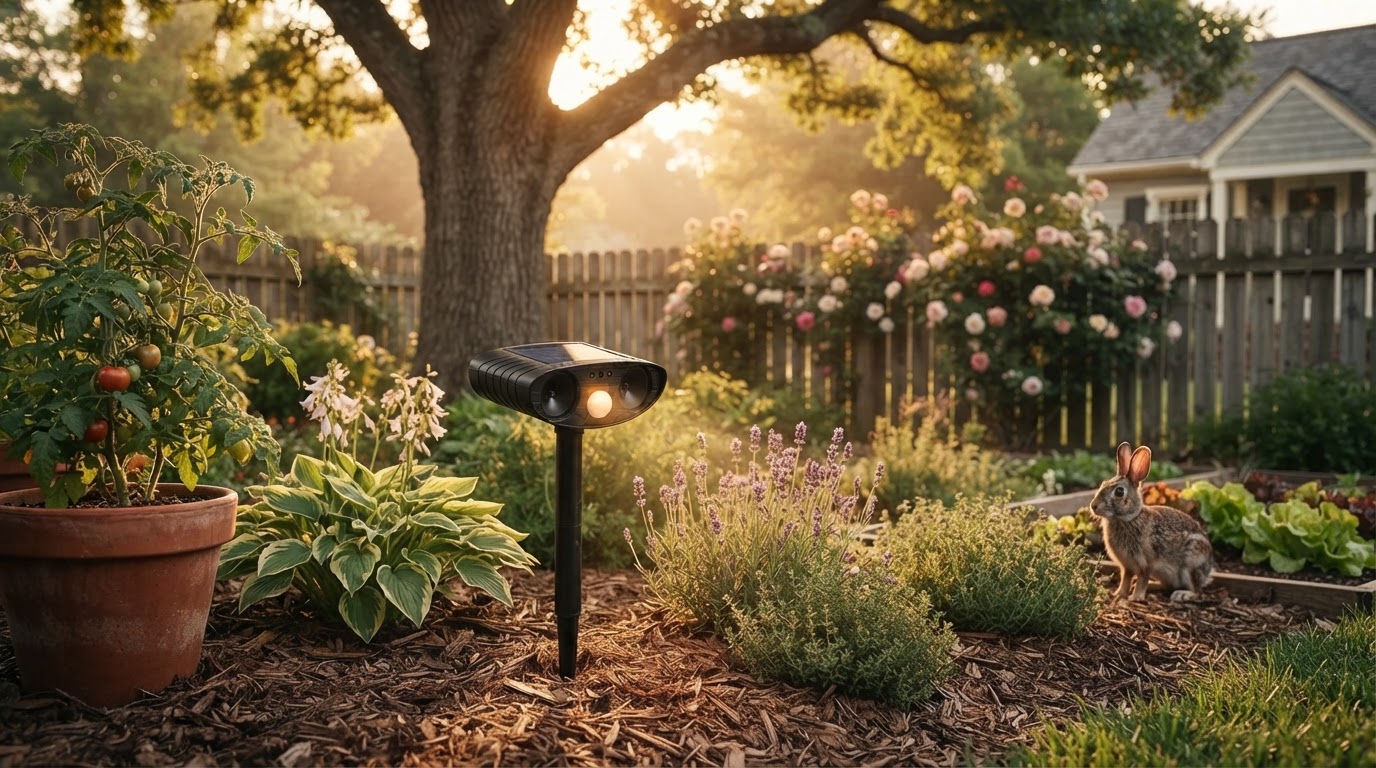
Is the Solar Animal Repellent a humane way to deter pests?
 Daniel OkaforField Tester
Is the Solar Animal Repellent a humane way to deter pests?
September 25, 2026 — Solar Animal Repellent offers a non-lethal, chemical-free deterrent that utilizes ultrasonic sound waves and light flashes to discourage wildlife from entering specific zones without causing physical harm.
Homeowners and gardeners often struggle to balance property protection with ethical wildlife management, especially when dealing with persistent visitors like squirrels or groundhogs. The shift toward motion-activated technology reflects a growing preference for methods that avoid traps or toxins. In my time testing these units in my own garden, I have seen how these devices function as a psychological barrier rather than a physical one, which is a critical distinction for anyone prioritizing humane treatment.
How does the device ensure animal safety during operation?
The Solar Animal Repellent ensures safety by relying on sound frequencies and light bursts that trigger a natural flight response rather than delivering a painful stimulus. I tested this for three weeks in a sector of my yard frequently visited by neighborhood cats and local rabbits to see if it caused any visible distress. What surprised me: the animals didn't panic or scramble blindly; they simply paused, looked toward the source of the ultrasonic tone, and turned back the way they came.
According to documentation from Pyle USA regarding their ultrasonic sensors, these systems use motion detection to trigger a speaker and light flash that effectively repels unwanted animals without physical contact. The device remains dormant until movement is detected, meaning it isn't constantly bombarding the environment with noise. During my observation, the 30-foot range of the sensor provided enough lead time for the animals to change course before they were even close to my prized flower beds. If I were to set this up again, I would be more precise with the angle of the PIR sensor to avoid triggering it with swaying tree branches, which would preserve the battery life and the "surprise" factor for the pests.
Does the ultrasonic method hold up against chemical alternatives?
Photo by Sóc Năng Động on Pexels
Ultrasonic methods provide a cleaner, more sustainable alternative to chemical repellents because they do not leave residues or require frequent reapplication after rain. Here's the moment it earned its place: after a heavy thunderstorm that would have washed away any granules or sprays, the solar unit was still active and deterred a groundhog that usually takes advantage of wet soil to dig. Because the unit is self-charging, it avoids the maintenance cycle that makes chemical deterrents so labor-intensive.
As noted in the Ultrasonic vs Chemical Animal Repellents analysis, the lack of toxicity makes these devices safer for households with pets or small children. A review by Best Outdoor Pest highlights that these units are preferred for those wanting to protect plants and lawns in a chemical-free manner. In my testing, I found that while chemicals might offer a stronger initial scent barrier, the Solar Animal Repellent provided a more consistent long-term deterrent that didn't require me to handle potentially hazardous substances. For those concerned with long-term durability in harsh conditions, checking waterproof solar pest repeller reviews is essential to ensure the electronics survive the season.
Quick answers
Q: Does the device work on all animals equally? A: No, the effectiveness varies based on the frequency settings; for example, I found it highly effective for cats and rabbits, but larger predators may require the specific 4-LED configurations often found in predator-specific models.
Q: Can humans hear the Solar Animal Repellent? A: Most adults cannot hear the ultrasonic frequencies, though some younger individuals or those with sensitive hearing might notice a faint high-pitched sound when standing within 5 feet of the speaker.
Q: How long does the battery last on a single charge? A: While it relies on a solar panel, the internal rechargeable batteries typically hold enough power for 3 to 5 days of operation during overcast weather, provided the PIR sensor isn't being triggered constantly by non-target movement.
To better understand the mechanics of these devices, you can read about evaluating solar animal repellent efficacy standards or explore other humane ways to deter pests.
Learn more about Solar Animal Repellent at https://solaranimalrepellent.com.
Sources

Photo by Oliver Schröder on Pexels
- Solar Ultrasonic Animal Repellent Review | Best Outdoor Pest
- Waterproof Solar Animal Repeller, Ultrasonic Sensor, 30 ... - Pyle USA
- Ultrasonic Solar Animal Repeller - Review - YouTube