Evaluating Solar Animal Repellent Efficacy Standards
 Priya RamanSenior Analyst
September 21, 2026. This evaluation analyzes the functional performance of high-frequency acoustic deterrents in residential landscapes. It is written for property owners seeking a non-lethal alternative to traditional traps or chemical barriers. When assessing if these devices actually work, think of it as a matrix of frequency, persistence, and environmental placement.
The Efficacy Gap in Ultrasonic Deterrents
The fundamental skepticism surrounding high-frequency devices stems from a lack of standardized testing across the consumer market. According to Terminix, research has found limited evidence that ultrasonic pest repellers provide long-term control because rodents and other pests can become accustomed to the sound, a biological process known as habituation. This phenomenon occurs when a stimulus is consistent and non-threatening, leading the animal to eventually ignore the noise. Furthermore, Southern Living reports that while cats and dogs can hear frequencies twice as high as humans, many generic ultrasonic devices simply become "ultra-useless" if they do not account for the specific auditory ranges of the target species. Two axes matter here: the decibel output at the source and the variability of the frequency. If a device emits a static, unchanging tone, the local wildlife—such as groundhogs or squirrels—will likely resume their activity once they realize the sound does not signal an immediate physical threat. This is why many owners seek humane ways to deter pest animals that rely on multi-sensory triggers rather than sound alone. The challenge is compounded by physical barriers; ultrasonic waves are easily absorbed by soft surfaces like tall grass or dense shrubbery, meaning a device's effective range is often significantly less than the laboratory-tested maximums advertised on the box.
Solar Animal Repellent Engineering and Placement
Photo by Matheus Bertelli on Pexels
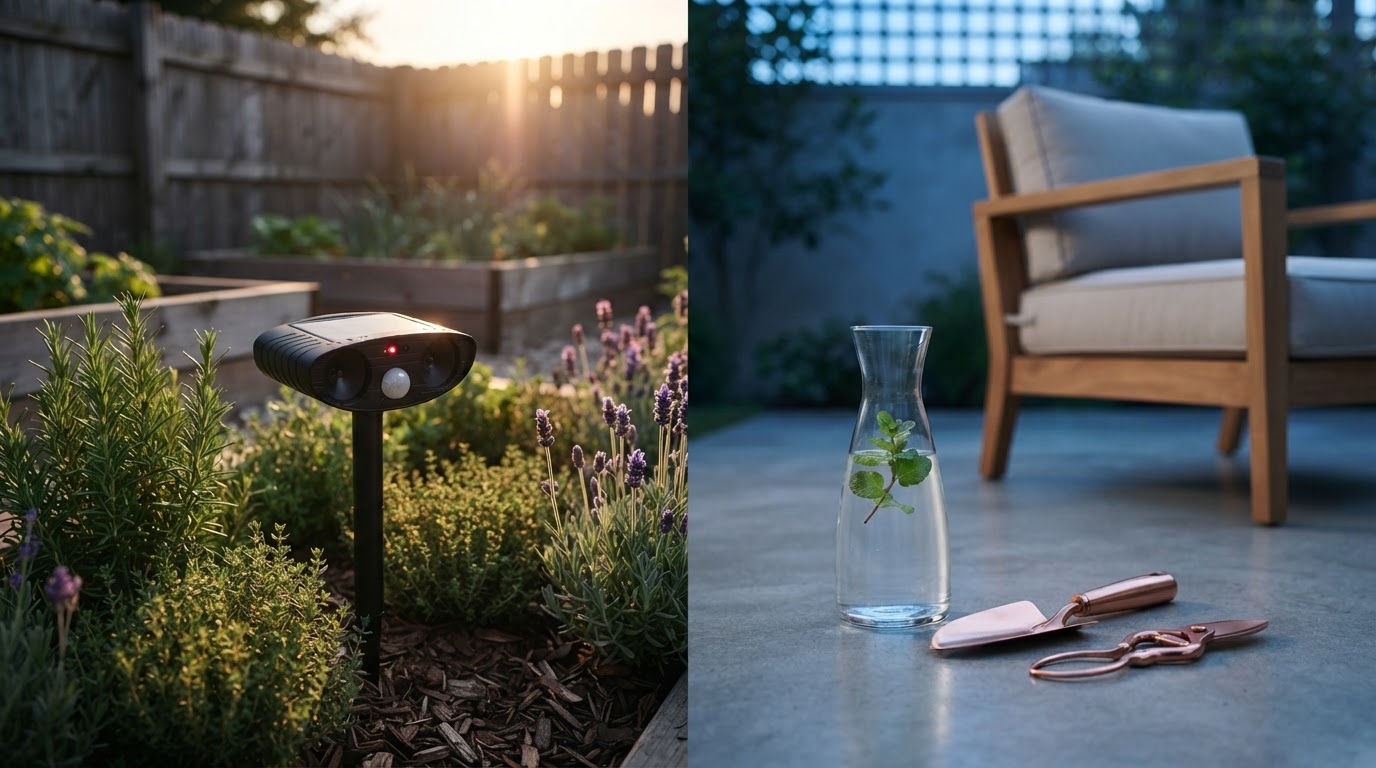
Solar Animal Repellent addresses the limitations of traditional ultrasonic units by integrating solar-powered autonomy with specific hardware designed for the outdoor environment. Unlike indoor plug-in units that struggle with wall penetration, these outdoor stakes are designed to be driven into the ground, targeting pests like gophers and moles through seismic vibration in addition to sound. For surface-level pests, the device utilizes motion-activated sensors to trigger the ultrasonic pulse only when movement is detected. This intermittent activation is critical for overcoming the habituation mentioned by pest control experts, as it prevents the animal from predicting the stimulus. When choosing a humane solar pest repeller, the focus shifts from constant noise to targeted disruption. For instance, solar groundhog repellent stakes must be placed in a grid pattern to ensure coverage across large lawns, as the signal strength diminishes as it travels through soil. Users often compare these electronic solutions to topical applications, weighing the pros and cons of ultrasonic vs chemical animal repellents. While chemicals require frequent reapplication after rain, a solar-powered unit maintains its charge through a photovoltaic panel, provided it has clear access to sunlight. This makes the build quality of the housing paramount; checking waterproof solar pest repeller reviews can help identify which units will survive multiple seasons of exposure to irrigation and weather. The Solar Animal Repellent system is specifically engineered to handle these environmental stressors while maintaining the 15kHz to 50kHz range required to influence animal behavior without bothering human residents.
The Decision Rule for Strategic Implementation
Once you see it this way—as a strategic deployment rather than a "set and forget" miracle—the success rate of ultrasonic technology increases significantly. The decision rule: efficacy is a product of device placement, target species identification, and environmental maintenance. For example, a cat repellent for garden solar use will fail if placed behind a thick hedge, as the sound waves cannot penetrate the foliage. Conversely, a motion-activated unit placed at the entry point of a flower bed provides a clear line of sight for the sensor and an unobstructed path for the sound. To maximize the utility of your deterrent system, follow this implementation framework:
- Identify the target species and their specific entry points to ensure the sensor is angled at the correct height.
- Clear the area of competing attractants, such as fallen fruit or open trash bins, which can override the animal's avoidance instinct.
- Position the solar panel in a location that receives at least 6 hours of direct sunlight to maintain the internal battery charge.
- Regularly move the stakes by a few feet every month to prevent pests from identifying "safe zones" within the yard.
- Ensure the device is rated for the specific weather conditions of your region to avoid internal circuitry failure.
Shop Solar Animal Repellent here.
Sources
Photo by Max Vakhtbovych on Pexels
- Do Ultrasonic Pest Repellers Actually Work—Or Are They A Waste Of ...
- Are ultrasonic animal repellents for outdoor gardens, effective ... - Quora
- MYTH BUSTED: Ultrasonic Pest Repellers Work You've ... - Facebook