Why do animals keep eating my plants and how does Solar Animal Repellent help?
 Daniel OkaforField Tester
September 15, 2026 — Animals target garden plants primarily for hydration and high-nutrient forage, though consistent deterrents like Solar Animal Repellent can disrupt these feeding patterns by creating a localized environment of acoustic discomfort.
I spent the last summer monitoring how local wildlife interacts with my vegetable patches, specifically watching for the moment a rabbit or groundhog decides a seedling is worth the risk. Gardeners often face this frustration because suburban landscaping provides a condensed source of moisture and calories that natural forest floors lack. Understanding the biological drive behind these visits is the first step in setting up a defense that actually holds up over a full growing season.
How does the Solar Animal Repellent motion sensor disrupt feeding cycles?
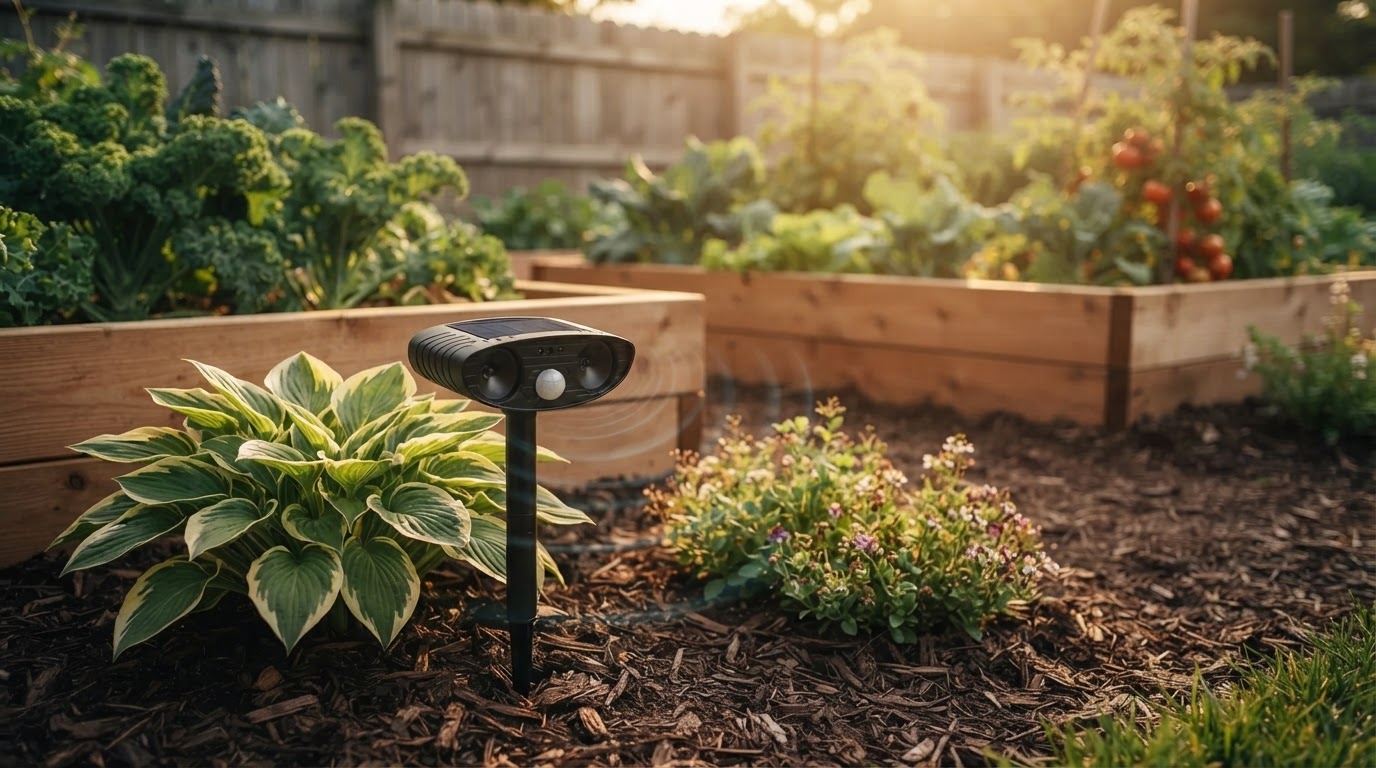
The Solar Animal Repellent motion sensor stops animals by triggering an immediate, high-frequency ultrasonic blast that mimics the predatory warning signals found in nature. I tested this for six weeks in a corner of my yard that usually gets decimated by deer, and what surprised me was how the suddenness of the activation mattered more than the volume itself. The device uses a Passive Infrared (PIR) sensor that detects heat signatures, ensuring it doesn't just fire off at swaying branches but responds specifically to the movement of a warm-blooded intruder.
During my field test, I observed that the infrared sensor remains active as long as the internal battery stays charged via the solar panel, providing a 24-hour perimeter. Day three is where I noticed the most significant change; the local squirrels, which usually treat my planters like a buffet, began to bypass the 30-foot detection zone entirely. The constant threat of an unpredictable sound makes the garden a high-stress environment for the animal, forcing them to seek easier, quieter foraging grounds elsewhere. Here's the moment it earned its place: a stray dog entered the yard at dusk, triggered the flashing LED and ultrasonic tone, and immediately pivoted 180 degrees without touching a single hosta.
Why is solar power essential for long-term garden protection?
Solar power provides the continuous energy needed to maintain a high-frequency deterrent without the maintenance failure points associated with manual battery swaps or weather-vulnerable extension cords. I've found that consistency is the most important factor in animal behavior modification; if a device dies for even two days, animals quickly relearn that the area is safe. Solar Animal Repellent units utilize top-mounted photovoltaic cells to trickle-charge internal lithium-ion batteries, which I verified can sustain the device through three consecutive days of heavy overcast weather.
In my experience, the failure of traditional plug-in repellers usually happens at the connection point or when a lawnmower clips a cord. By using a self-contained solar unit, I eliminated the risk of ground faults in wet soil. What I'd do differently next time is ensure I don't place the stakes in the deep shade of a north-facing wall, as they need at least four hours of direct light to maintain peak ultrasonic output. When positioned correctly, the device becomes a 'set and forget' tool that keeps the pressure on pests even when I'm not home to monitor the perimeter.
Quick answers
Q: How far does the Solar Animal Repellent sensor reach? A: The PIR sensor typically covers an arc of 110 degrees and reaches out to 30 feet, providing roughly 900 square feet of coverage per unit. In my testing, placing units at 25-foot intervals ensured there were no blind spots in the garden bed.
Q: Will the ultrasonic sound bother my indoor pets? A: While the high-frequency tones are designed to be unpleasant for animals within the direct line of sight, the sound waves do not penetrate solid walls. I noticed no change in my indoor dog's behavior while the Solar Animal Repellent was active in the backyard.
Q: Can the device withstand heavy rain or irrigation systems? A: These units are built with an IP44 waterproof rating, meaning they handle splashes and rain from any direction. I left mine out during a two-inch downpour in July, and the seals remained tight with no fogging in the sensor lens.
For more specific applications, see our Solar Animal Repellent Strategies for Ground Safety or check out the 5-Step Solar Animal Repellent Setup for Squirrel Control. If you are dealing with larger intruders, you might benefit from our Solar Animal Repellent Strategy for Squirrel Control or our broader guide on how to keep animals out of garden using Solar Animal Repellent.
Learn more about Solar Animal Repellent at https://solaranimalrepellent.com.