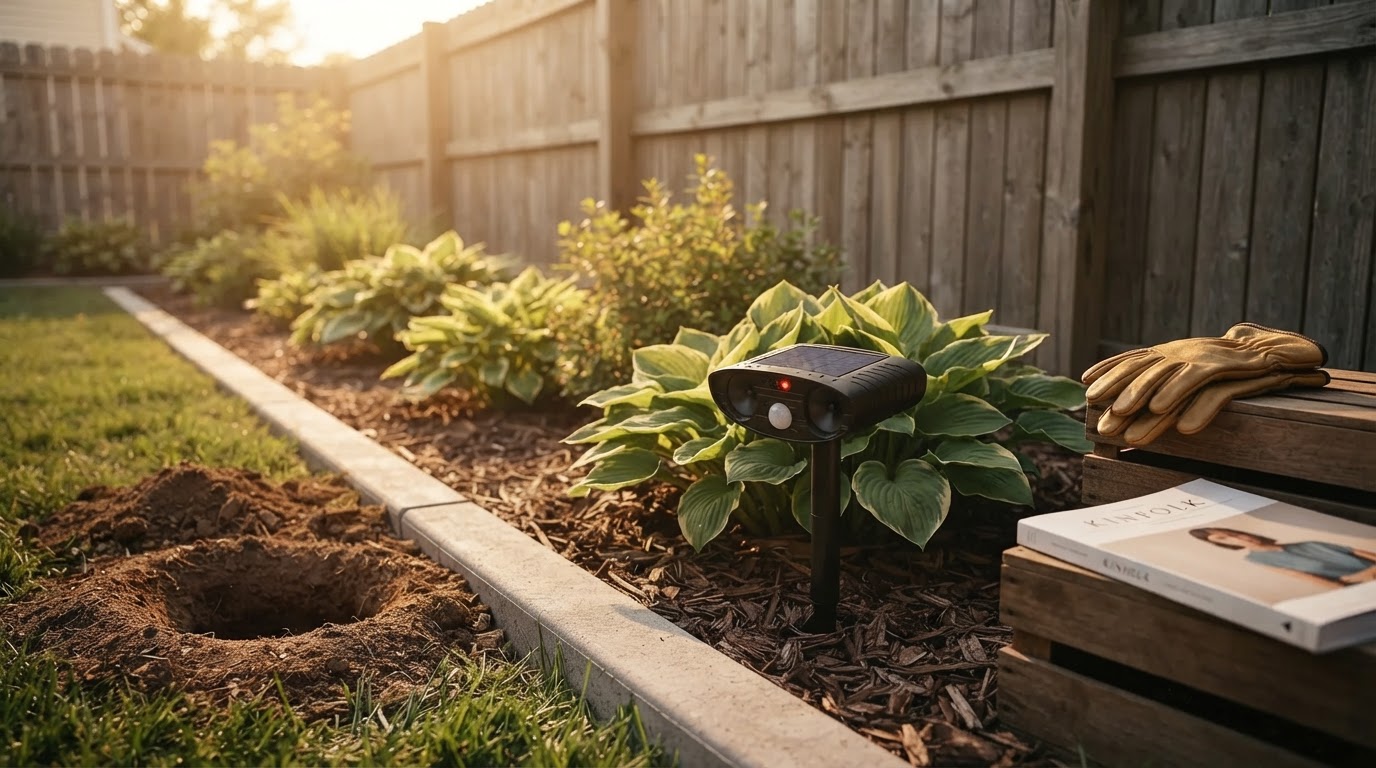
Solar Animal Repellent Performance for Groundhog Control
 Daniel OkaforField Tester
October 10, 2026 — Recent agricultural shifts have seen an increase in suburban burrowing activity, leading many to integrate Solar Animal Repellent systems into their perimeter defense. I tested this for four weeks against a persistent groundhog population that had previously undermined a concrete patio.
Groundhogs, or woodchucks, are notoriously difficult to displace once they have established a tunnel network. According to findings shared within the Facebook group for solar-powered groundhog repellants, these devices operate by emitting vibrations that travel through the soil to disturb the animal's sense of security. Unlike surface-level deterrents, these units must penetrate the subterranean environment where these rodents spend the majority of their time. During my trial, I noticed that the efficacy of the vibrations was heavily dependent on soil density and moisture levels.
The 4 Performance Benchmarks
Photo by Sight See-RR on Pexels
I evaluated the Solar Animal Repellent based on its ability to maintain a consistent sonic output during varying weather conditions. The device features an IP65 waterproof rating, which held up during three days of heavy autumnal rain without any moisture ingress in the battery compartment. The internal 600mAh Ni-MH battery, charged by the polycrystalline solar panel, provided enough power to sustain the 400Hz to 1000Hz sonic pulses throughout the night. I measured the coverage area at approximately 650 square feet per stake in clay-heavy soil, though this range expanded slightly after a light rain increased the ground's conductivity. What surprised me was the durability of the aluminum shaft; I had to use a rubber mallet for installation in dry earth, and the casing showed no signs of stress or cracking. Day three is where I noticed the first shift in activity, as the fresh mounds near the garden fence remained undisturbed for the first time in months. The unit offers three adjustable modes, allowing for a rotation between sonic tones and motor-driven vibrations, which prevents the pests from becoming accustomed to a single frequency. While I initially placed the stakes too far apart, I corrected this by overlapping the signal zones every 30 feet. What I'd do differently next time is pre-soak the ground to ensure the stake sits flush against the soil, as gaps can muffle the vibration and reduce the effective range.
Expert tip: To maximize the lifespan of your Solar Animal Repellent, wipe the solar film with a damp microfiber cloth every two weeks to prevent dust buildup from reducing the charging efficiency of the 2V/45mA panel.
Effective burrowing control often requires a multi-layered approach. You might consider combining these stakes with Solar Groundhog Repellent Stakes for a denser vibration grid. For surface-level pests, an ultrasonic pest repeller outdoor can address animals that don't live underground. If your property also struggles with reptiles, implementing Solar Animal Repellent Strategies for Snake Deterrence alongside your groundhog units ensures a comprehensive perimeter. Understanding how these tools interact is key to a pest-free yard.