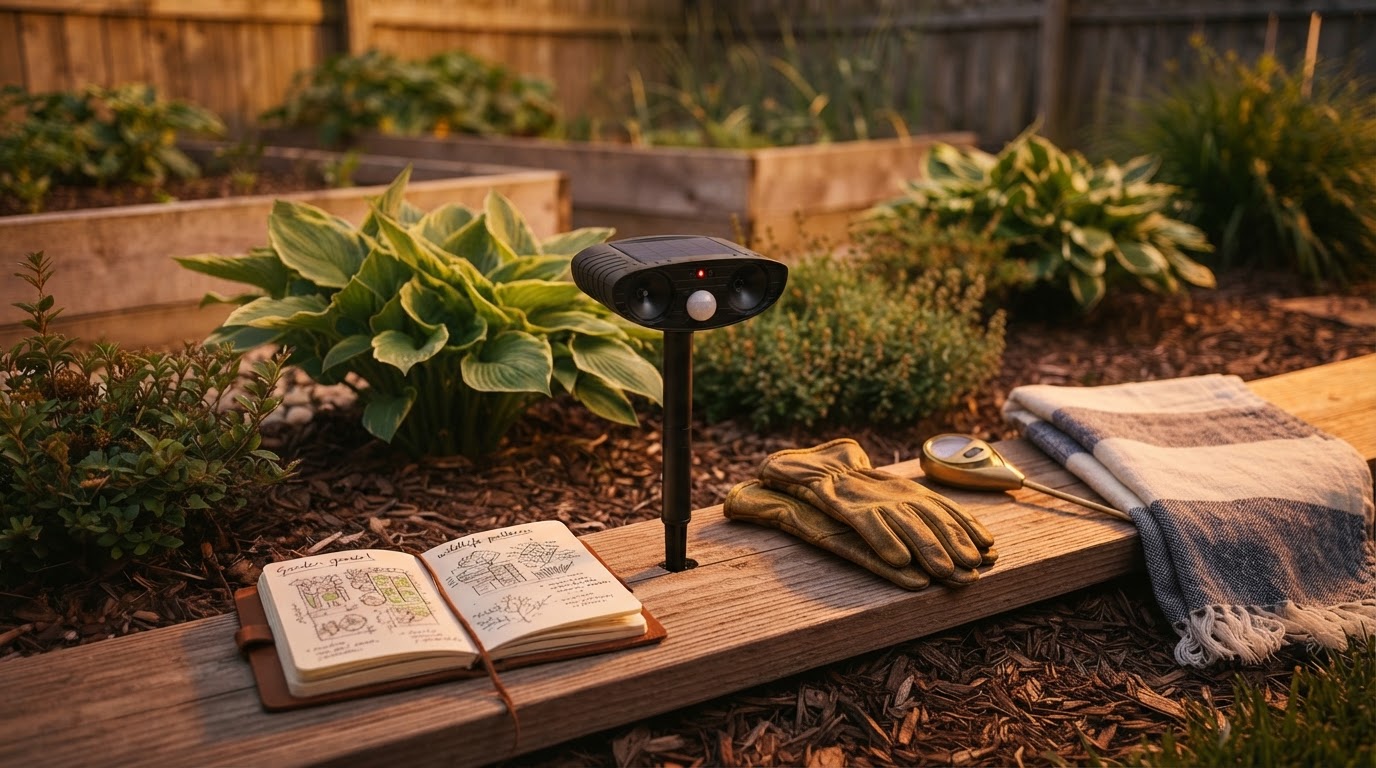
Selecting Solar Animal Repellent for Raccoon Management
 Priya RamanSenior Analyst
September 6, 2026. This analysis evaluates the technical requirements for deploying Solar Animal Repellent systems to mitigate raccoon activity in residential environments. It is designed for property owners seeking non-lethal, automated solutions to nocturnal wildlife intrusion.
Effective wildlife management requires a systematic approach rather than a reactive one. Think of it as a matrix of environmental pressure and device capability. To choose the correct hardware, two axes matter here: the intensity of the pest presence and the specific topological constraints of the installation site. By mapping these variables, homeowners can transition from intermittent success to a sustainable barrier. This framework prioritizes the integration of ultrasonic frequencies and motion-activated visual stimuli to exploit the natural biological aversions of opportunistic foragers like raccoons and skunks.
The Dynamics of Urban Raccoon Persistence
Raccoons present a unique challenge to property maintenance due to their high cognitive adaptability and nocturnal habits. Unlike smaller rodents, these mammals are capable of identifying patterns in static deterrents, which often leads to habituation. The problem is compounded in urban settings where food sources are abundant and natural predators are scarce. Homeowners frequently report that traditional fencing or chemical applications fail to provide long-term relief because they do not address the raccoon's sensory triggers. The search for a raccoon repellent outdoor solar solution often stems from the failure of passive barriers to prevent digging and foraging in sensitive areas like vegetable gardens or decorative ponds.
According to wildlife behavior patterns documented by the University of California Agriculture and Natural Resources, raccoons are highly motivated by food rewards, meaning a deterrent must provide a consistently negative stimulus to override the incentive of available trash or garden produce. When these animals encounter a space, they assess it based on safety and accessibility. If a location suddenly introduces unpredictable ultrasonic waves or light flashes, the perceived risk of the environment increases. This shift in the risk-reward ratio is what drives successful exclusion. The persistence of these animals also means that equipment must be durable enough to withstand the elements, a consideration that leads many to investigate a waterproof solar skunk repellent as a parallel requirement for comprehensive yard coverage, as these two species often occupy similar niches.
Solar Animal Repellent Technical Implementation
Photo by Erik Karits on Pexels
The Solar Animal Repellent addresses these challenges by utilizing a multi-modal sensory disruption strategy. The device is engineered to convert solar energy into a persistent power source for high-frequency transducers and LED arrays. This autonomy is critical because raccoons are most active during the hours when human intervention is least likely. The hardware typically features a Passive Infrared (PIR) sensor that detects movement within a specific arc, triggering a burst of ultrasonic sound that is uncomfortable for the animal but silent to most humans. This targeted response prevents the habituation issues common with devices that run on a continuous loop.
Once you see it this way, the importance of placement becomes clear. For instance, users often search for solar groundhog repellent stakes to protect root systems, but for raccoons, the device must be positioned at an elevation that aligns with their head height to maximize the impact of the ultrasonic wave. The integration of light is equally vital. Raccoons have highly sensitive night vision, making them susceptible to the sudden activation of high-intensity LEDs. This dual-action approach—combining auditory and visual stimuli—creates a layered defense. In areas where skunks are also a concern, utilizing solar skunk deterrent lights in conjunction with ultrasonic units provides a broader spectrum of deterrence. Furthermore, the use of solar groundhog repellent devices can help secure the perimeter against burrowing animals that might otherwise create entry points for raccoons under decks or sheds.
Decision Framework for Device Deployment
Photo by Max Vakhtbovych on Pexels
Selecting the appropriate configuration for a Solar Animal Repellent system depends on the specific vulnerabilities of the landscape. The decision rule: prioritize sensory overlap in high-traffic zones while ensuring the solar panels have unobstructed access to southern light for maximum battery health. A single device may cover a specific garden bed, but a larger perimeter requires a staggered deployment to eliminate "dead zones" where an animal might find refuge from the ultrasonic signal. The following checklist serves as a technical guide for optimizing your installation:
- Identify primary entry points and food sources to determine sensor orientation.
- Verify that the PIR sensor range covers the entire width of the expected approach path.
- Ensure the solar collector is free from foliage shadows for at least six hours of daylight.
- Adjust the frequency dial to the specific setting recommended for medium-sized mammals.
- Monitor battery levels during periods of extended cloud cover to maintain consistent protection.
- Clean the ultrasonic transducer face monthly to prevent debris from dampening sound output.
Shop Solar Animal Repellent here