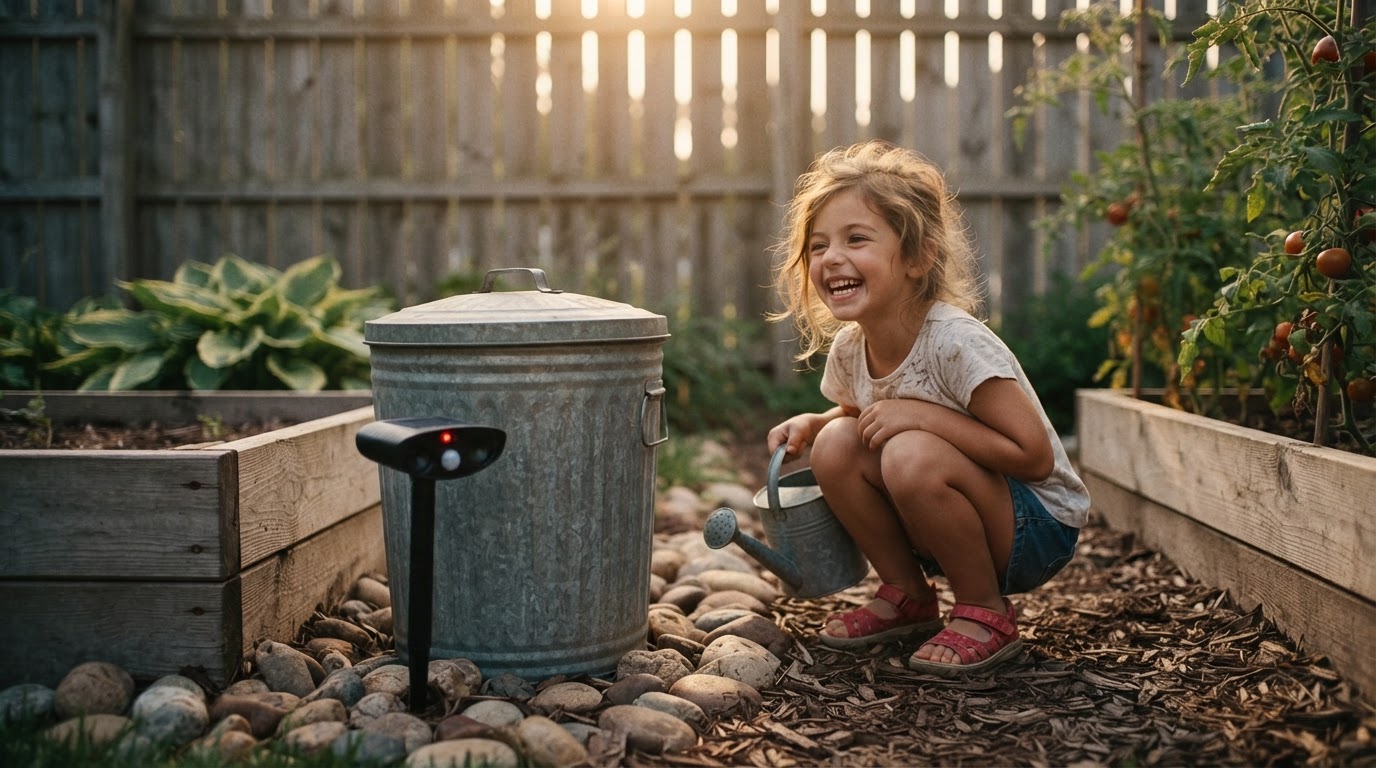
How to Use a Solar Animal Repellent to Protect Trash Cans?
 Priya RamanSenior Analyst
October 6, 2026 — Effectively deterring raccoons from trash bins with a Solar Animal Repellent requires a dual-axis approach of sensory disruption and physical exclusion to overcome their high intelligence and dexterity.
Homeowners frequently struggle with persistent nocturnal scavenging, where standard lids fail against the nimble paws of North American raccoons. Protecting the sanitation area is not merely about containment, but about altering the environment so it is no longer perceived as a safe foraging zone. A successful strategy involves mapping the perimeter of the waste storage area to identify the most effective deployment points for technology-driven deterrents.
Think of it as a matrix of sensory triggers and environmental obstacles. Two axes matter here: the detection range of the device and the specific frequency of the deterrent signal. Once you see it this way, positioning the Solar Animal Repellent becomes a matter of geometry rather than guesswork.
How should a Solar Animal Repellent be positioned for maximum effectiveness?
A Solar Animal Repellent should be placed approximately 15 to 20 feet away from the trash cans, facing the expected path of approach to trigger its sensors before the animal reaches the bins. According to the Town of Huntington, New York, motion detection lights and flood lights serve as significant deterrents because raccoons prefer to forage in the shadows where they feel secure. By placing the solar unit at a height of 12 to 18 inches, the Passive Infrared (PIR) sensor aligns with the raccoon's body mass, ensuring the ultrasonic blast or strobe light activates immediately upon their arrival.
The decision rule for placement is to avoid placing the device directly against the bin, which can create "blind spots" where the raccoon can hide behind the container. Instead, creating a "kill zone" of ultrasonic sound waves across the entire approach path ensures the animal is met with an unpleasant stimulus well before it can begin working on the lid. Bird-X notes that devices like the Solar Yard Gard are specifically designed to manage these residential outdoor spaces by utilizing high-frequency sound that is irritating to pests but largely unnoticed by humans. Ensuring the solar panel receives at least four to six hours of direct sunlight is critical for maintaining the battery charge necessary for nocturnal operation.
Can ultrasonic solar devices stop raccoons from opening lids?
Photo by Sóc Năng Động on Pexels
Ultrasonic solar devices function as a psychological barrier that discourages entry, though they are most effective when paired with mechanical locks to prevent persistent scavengers from testing the lids. Data from community discussions on platforms like Facebook suggests that while electronic deterrents are powerful, combining them with physical measures such as locking lids or heavy-duty straps creates a multi-layered defense that raccoons cannot easily bypass. The ultrasonic frequency disrupts the raccoon's acute hearing, making the area around the trash can appear hostile and unpredictable, which typically triggers a flight response in all but the most habituated animals.
To optimize this setup, users should utilize the variable frequency settings often found on Solar Animal Repellent models. Raccoons are highly adaptable; if they hear the exact same tone every night, they may eventually habituate to it. By cycling the frequencies, the stimulus remains novel and threatening. This approach mirrors Solar Animal Repellent Strategies for Raccoon Control, which emphasizes the importance of changing tactics to stay ahead of urban wildlife. Furthermore, maintaining a clean perimeter by washing the exterior of the bins with bleach or vinegar can remove the scent trails that attract raccoons in the first place, allowing the solar device to serve as the primary deterrent against new arrivals.
Quick answers
Q: How long does it take for a solar repellent to start working on raccoons? A: Most users observe a change in animal behavior within 48 to 72 hours, though it may take up to two weeks for resident raccoons to fully abandon a high-value food source like a trash bin. Consistent solar charging is required to ensure the device operates at peak decibel levels during the night.
Q: Does the Solar Animal Repellent work in the rain while protecting trash areas? A: Yes, these units are typically rated with an IP44 or higher waterproof certification, allowing them to remain functional during storms. For similar protection against other pests, homeowners often look for a [waterproof solar skunk repellent](/blog/waterproof-solar-skunk-repellent) to ensure year-round reliability in damp environments.
Q: Can I use multiple solar units for a single trash enclosure? A: Using two units placed at 90-degree angles to each other is highly recommended for large enclosures to eliminate acoustic shadows. This ensures that even if a raccoon approaches from the side, it will be detected by at least one PIR sensor. This multi-unit strategy is also effective for those trying to [keep skunks away from house solar](/blog/keep-skunks-away-from-house-solar) installations.
Learn more about Solar Animal Repellent at https://solaranimalrepellent.com.
Sources
Photo by Matheus Bertelli on Pexels
- How to deter raccoons from rummaging through garbage bins?
- Raccoon Control | How to Get Rid of Raccoons - Bird-X
- Keeping Raccoons Out of Your Trash - HuntingtonNY.gov